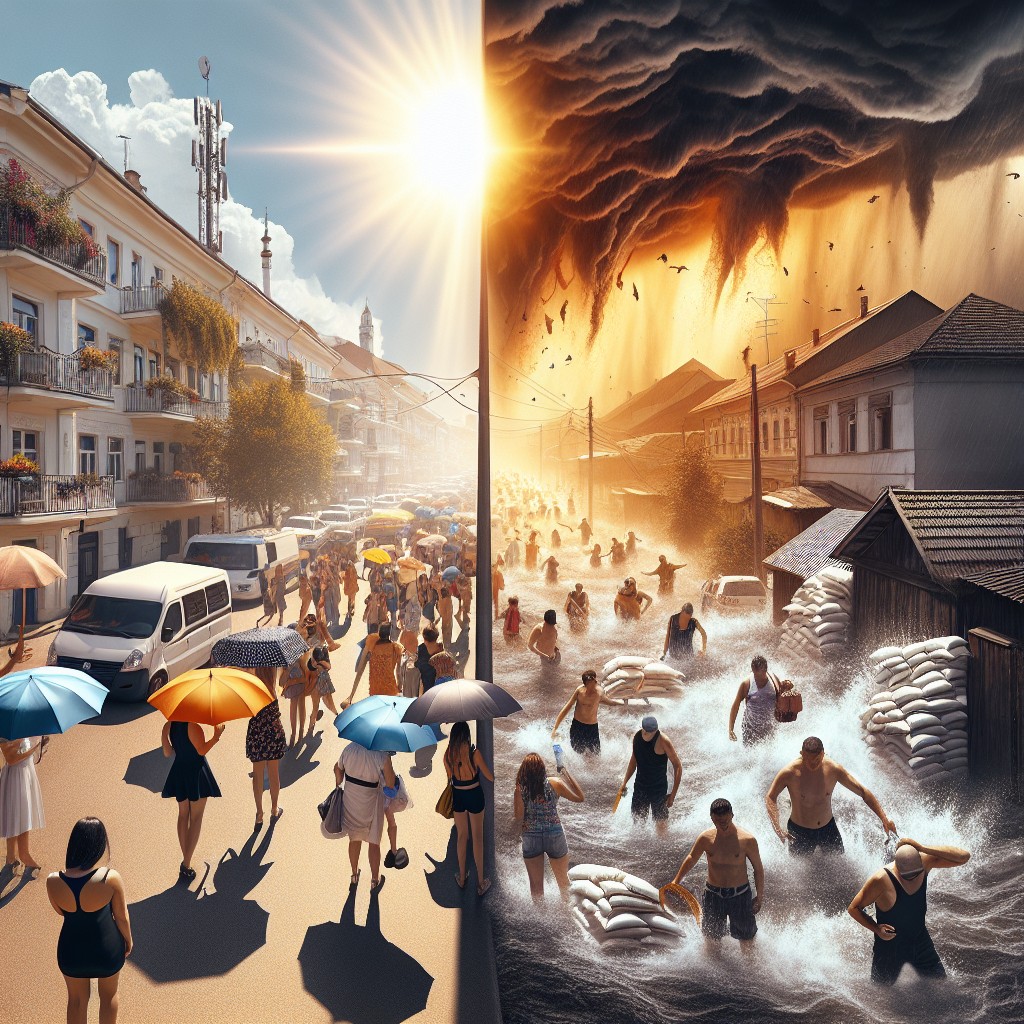
Romania is increasingly facing climate extremes Romania such as severe heatwaves and intense flash floods, which pose significant challenges to public safety and infrastructure. As global climate patterns continue to shift, understanding and preparing for these events becomes vital for Romanian communities, governments, and industries alike.
Rising Temperatures and Heatwaves in Romania
Heatwaves have become more frequent and intense across Romania over recent years, with summer temperatures reaching unprecedented highs. These heatwaves particularly affect urban areas, where the combination of dense construction and limited green space elevates the risk of heat-related illnesses. Prolonged exposure to extreme heat places vulnerable groups, including the elderly and those with pre-existing health conditions, at significant risk.
The Increasing Risk of Flash Floods
Alongside heatwaves, flash floods represent another major climate risk in Romania. Sudden, intense rainfall events can overwhelm drainage systems and lead to rapid flooding, often causing damage to homes, agricultural lands, and transportation networks. The Carpathian mountainous region is especially susceptible, where steep slopes and deforestation amplify runoff and flood hazards.
Government Strategies for Climate Extremes in Romania
Romanian authorities have implemented several initiatives aimed at reducing the impacts of climate extremes Romania. These strategies include enhancing meteorological monitoring systems to provide timely warnings and upgrading infrastructure to improve resilience against heat and flooding. Efforts to restore natural floodplains and increase urban green spaces also contribute to mitigating extreme weather effects.
Practical Preparations for Heatwaves
Individuals and communities can take practical measures to prepare for heatwaves. Staying hydrated, avoiding outdoor activities during peak heat hours, and using cooling systems when available are essential practices. Local governments are encouraged to set up cooling centers and conduct public awareness campaigns to inform residents about heat risks and symptoms of heat exhaustion.
Mitigating Impact of Flash Floods Locally
Preparing for flash floods involves both structural and non-structural approaches. Reinforcing riverbanks, improving urban drainage, and enforcing land-use regulations help reduce vulnerability to flooding. On a community level, having clear evacuation plans and access to timely weather information can significantly decrease loss of life and property damage during flash flood events.
Conclusion
As climate extremes continue to affect Romania with increasing frequency and severity, coordinated action from government agencies, private sectors, and local communities is essential. While adaptation and mitigation efforts are underway, ongoing vigilance and practical preparation remain crucial. The future resilience of Romania to climate extremes will depend largely on sustained investment in infrastructure, education, and environmental preservation.
Frequently Asked Questions about climate extremes Romania
What are the main causes of climate extremes Romania is experiencing?
Climate extremes Romania faces are largely the result of global climate change, which leads to higher temperatures and altered weather patterns causing more frequent heatwaves and flash floods.
How can individuals protect themselves during heatwaves in Romania?
Individuals can protect themselves during heatwaves by staying hydrated, avoiding strenuous outdoor activities during the hottest parts of the day, and seeking air-conditioned or shaded environments.
What areas in Romania are most vulnerable to flash floods?
Mountainous regions such as the Carpathians and downstream river valleys are most vulnerable to flash floods due to steep terrain and intense rainfall events exacerbated by deforestation and urbanization.
What measures is the Romanian government taking against climate extremes Romania?
The government is improving early warning systems, investing in resilient infrastructure, restoring natural floodplains, and promoting urban green spaces to reduce the impact of climate extremes Romania faces.
Can communities play a role in adapting to climate extremes Romania?
Yes, communities play a critical role by preparing emergency plans, participating in awareness programs, and adopting local initiatives that reduce risks from heatwaves and flash floods.